Book Reviews

Higher and Higher

Fiction, I feel, is a lifesaver in this day and age.  So many crazy and horrible things are happening out there that it’s nice to get away into something that may very well be equally crazy and horrible, but it’s fake, so no one is getting hurt.

Normally, horror is my go-to. The profane soothes my soul. This time, I opted for something a little bit different.

https://www.instagram.com/p/CCYf-FeFoQq/

Elevation, by Stephen King, is a baby novel that is just about as feel-good and bittersweet as you can get.  It’s about a man, Scott Carey, who is losing weight at a rapid pace for no definable reason.  He doesn’t look like he’s losing weight.  He looks the same as he always has.  But if he steps on the scale, he weighs 180.  If he steps on the scale naked, he weighs 180.  If he steps on the scale with fifty pound weights, you guessed it, a whopping 180.  It doesn’t matter how much or how little he has on him, he always weighs the same.  And the weight is only climbing down.

Along the way, he confides in his old family doctor the phenomena, moreso to have someone to confide in than to get answers as to why.  Truth is, he doesn’t want to know why, and he knows if word gets out, he’ll just be another marvel of medical science that will guarantee his last moments will be spent hooked up to wires inside some facility and studied like a lab rat. 

He also slowly builds a relationship with his neighbors, Deidre and Missy, the only married lesbian couple in town.  Basically, Castle Rock is super conservative (something I know and have experienced all too well), and the rest of the town looks down on them.  They don’t trust his intentions at first after he brings pictures of their dogs shitting in his yard to their doorstep, but eventually everyone comes around, if things are a little strained at the word go.

The more weight he loses, the less attached to gravity he becomes.  In fact, he’s worried he’s about to lose touch altogether and just start floating.

Leaving gravity on read? Ghosting gravity? Ghosting gravity.

This book was a curious mix of Thinner, also by Stephen King, and Pop Art, written by his son, Joe Hill.  I think it was good, but not his best work.  I got more emotional over Pop Art, I think.  I was more at the edge of my seat over Thinner (but I don’t think he was going for a thriller story, so I don’t judge too harsh on that).  The only part that made me feel anything was when Scott had to give away his cat.  Other than that, it was just a nice little story, and a nice little break from the real world terrors that are happening out there.

One part that got me that I still think about doesn’t even have to do much with the content of the book itself and more to do with someone else’s review on a Stephen King group on Facebook.  They said essentially they didn’t like it because they thought it was too political.  And I just don’t see that?  There is a drop of Trump at the beginning to set the scene and the main character’s stance, and that’s it.  Unless they meant Deidre and Missy being married?  I hope that’s not what they meant, because I think that says more about them than about the book, but there’s that.  I dunno, man.  People be cray.

Rating wise?  I’ll give it like a 5/10.  It wasn’t terrible.  But it wasn’t great, either.  I feel like the shorter the story, the bigger the punch in the heart, and this one left me wanting.

And because I like to scream questions out to the void that often go unanswered: Do you like your stories longer or shorter?  I think for me, it varies, but I’d rather read a good story that spans hundreds upon hundreds of pages.  I like getting lost and staying lost, because goodbyes suck.

Uncategorized

Stranger Than You Dreamt It

If you thought I was done gushing about Joe Hill, hooboy were you wrong.  I finally got around to reading Strange Weather, a book composed of four different stories, and I just…

Damn, dude.

That cover art is so bad ass, too – https://www.instagram.com/p/B4svFOOACAP/

Let’s get this started.

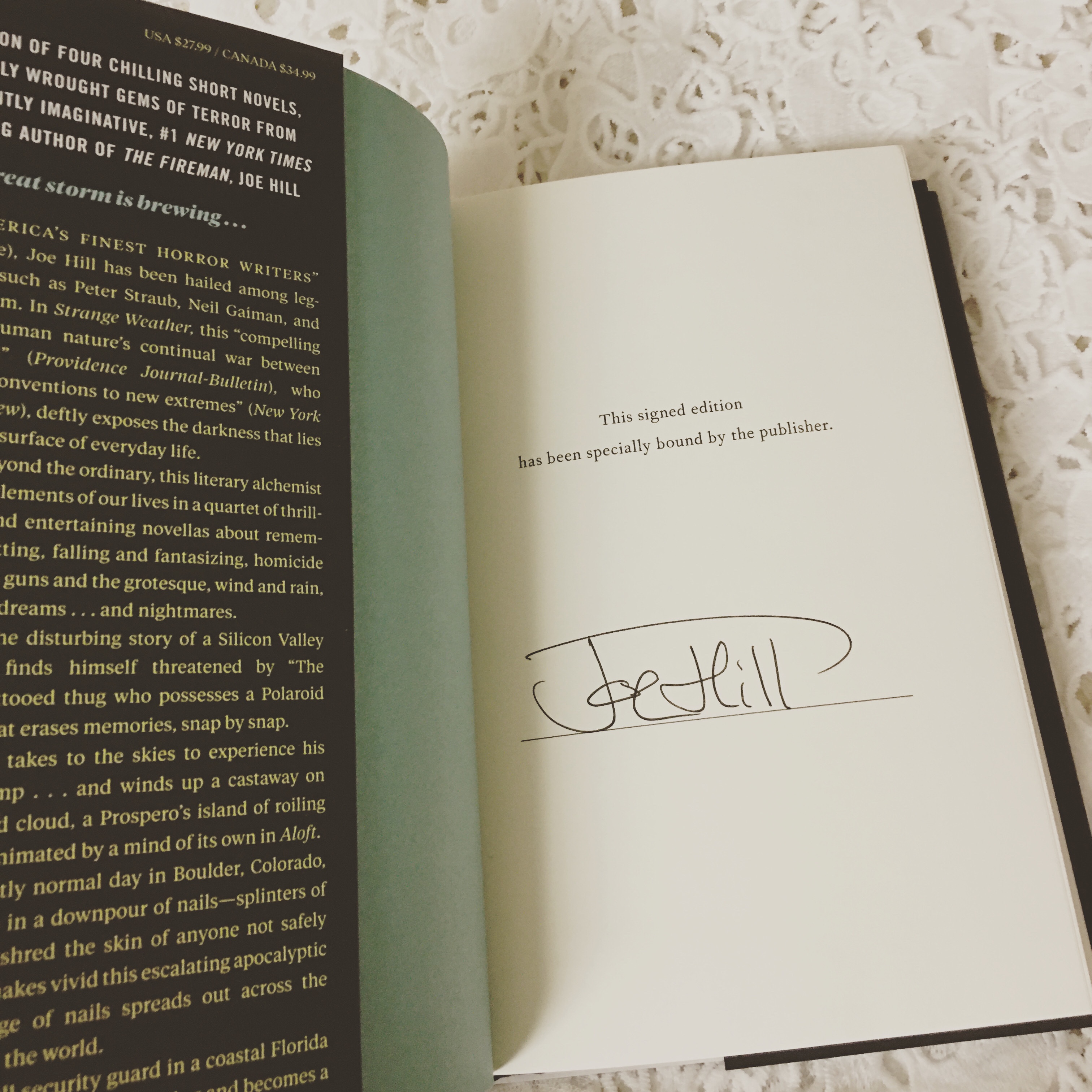
So first off, this is my first signed copy of one of his books. It stayed in a curio cabinet where I had the beginnings of a collection going (Stephen King’s End of Watch among the small stack that has since grown). I was not one of the lucky few who had a doodle sketched by his name, but it’s still special to me nevertheless.

And now I need more – https://www.instagram.com/p/B4svZrygVLA/

The book is comprised of four shorts, each one taking place in a different season, and I use season loosely here.  Each has its own tone, its own quasi sort of personality.  It’ll leave you feeling scared of the unknown, then terrified of the world we live in.  It’ll bring you up to the top of the clouds, then plummet you back to the world below without anything to break your fall but the cold, hard ground.

Friends.  I loved this book.

The first story, Snapshot, follows a boy who after a brief altercation, has to watch his back against the man with the weird camera that snaps pictures of the past by sucking up memories. Hill has terror down to an art. I haven’t been so scared to turn the page since I read Heart-Shaped Box, another goodie written by Joe Hill. And god, the ending! A beautiful twist to an otherwise frightening tale.

American productivity would nearly double if everyone were free to work pantsless. Words to live by.

Things take a turn in Loaded, when a terrorist attack isn’t all it appears to be.  It was a total edge-of-your seat thriller where the villains are in the wrong place at the wrong time and the heroes have their own agenda.  The story is not for the faint of heart.  There is no happy ending, but like real life, there will be no happy ending until a solution to mass shootings is found one way or the other.

The third short, Aloft, plays with the question we’ve all had at one point in our lives or another: What if we could walk on clouds?  A young man—unwillingly—finds out that it’s not all it’s cracked up to be after a sky-diving accident.  He’s stuck a few miles in the air, and the only way off this ride is a suicidal jump to the surface.  Freezing, starving, and oh so thirsty, will he have the courage to find a way out?

Rain takes place at the beginning of a dystopian future, where rain falls from the sky as long, sharp crystals that tear families apart—both figuratively and literally.  A young woman’s girlfriend is torn to pieces by the needles right before her eyes, and she is determined not to let the loss break her.  She must find a way to survive this new world and the anarchy around her.

What can I say?  Each story had strong characters that you wanted to either watch succeed or witness their ultimate demise.  The thought-provoking themes forced you to put the book down and process what you just read before moving on to the next.  Some collections of short stories stay with you for a moment before floating on by, out of sight, out of mind.  The collection in Strange Weather, however, stick.  And yeah, it could be because there are only four stories in there, but I take into account that I finished this book almost a month ago before having the time to sit down and write out something other than word vomit (which this probably still is let’s be fair here), and I still remember what I read.  I still remember how each story made me feel.  That’s some good writing there.

All in all, I’d give this collection 10/10.  Snapshot was hands down my favorite; I’m a sucker for supernatural horror.  It was a damn fun ride, and I can’t wait to read his next collection (also sitting in the curio cabinet). 

Have you read Strange Weather?  Which one was your favorite?

Uncategorized

My Sin, My Soul

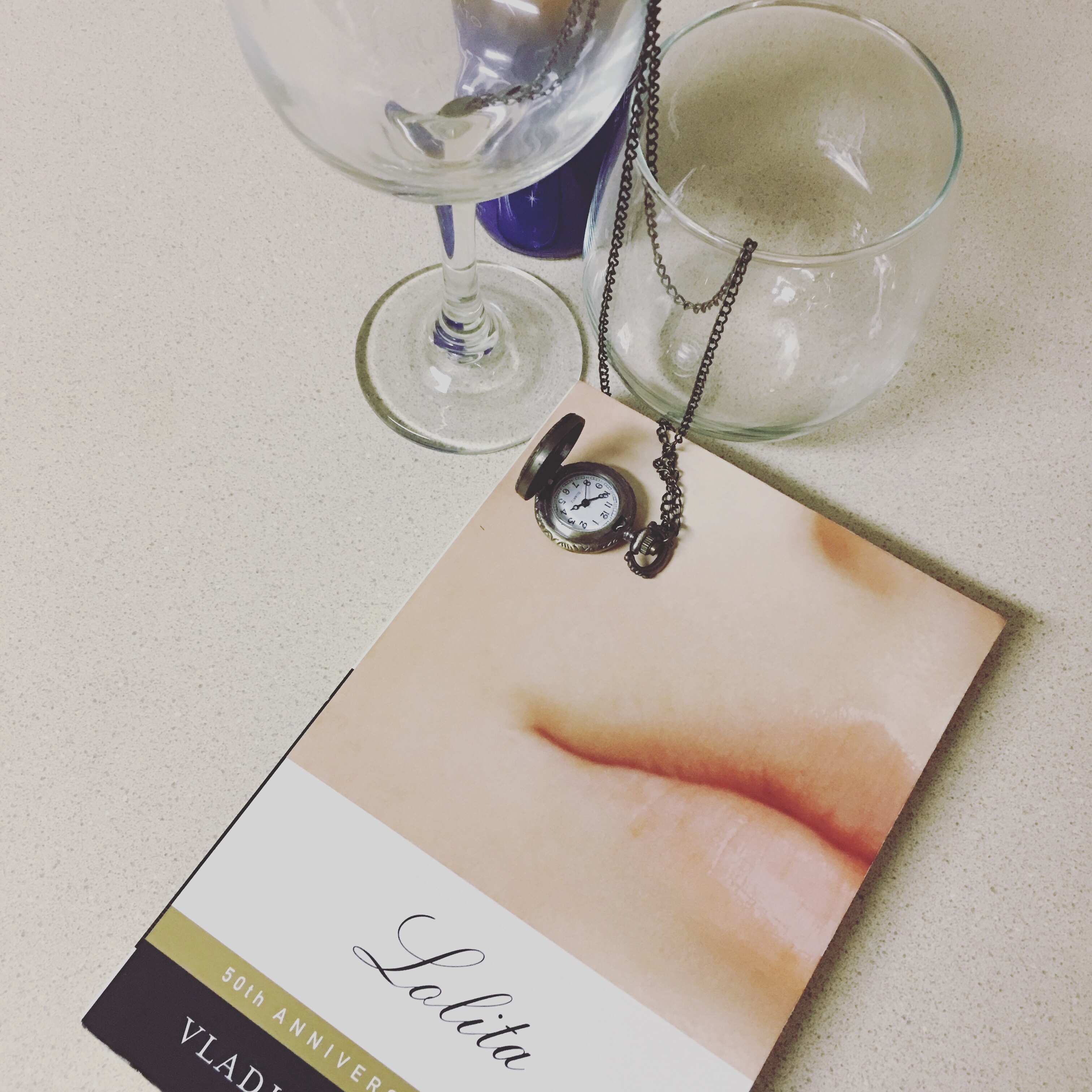
Sometimes, you don’t just come across a book as much as it’s thrown your way in disgust and beauty and intrigue, and every time it comes close, you step to the side and let it bounce on by for the next person to deal with.  I don’t know if it was lack of time or desire that made me shrug off Lolita.  I would say the sketchy subject matter scared me away, but I’m far from the type to shy away from heavy subject matter, and even less the type to give up on a story because of a revolting narrator.

Let me come clean.

I didn’t just happen upon this in a book store. I wasn’t lead by a friend or colleague in the natural sense that most people find their next novel. I was directed to Lolita by none other than Pewdiepie, in one of those rare book club videos. Yup, that’s right, folks. I’m a nine-year-old. Fight me. (But don’t, seriously, because I am but a weak almost 30 year old who doesn’t know how to fight and conflict makes me feel icky.)

https://www.instagram.com/p/B3dK_YZAWPk/

The point is I knew Lolita existed, but I never cared enough to read it.  And now, after the last page, I wish I had read it sooner.  Or if not sooner, I wish I had read it with a group so I could talk about it with someone and hear other’s thoughts about it as a whole.  And since my book club doesn’t read the same book, I’m just here shouting to the void about this.

That’s you.

You’re the void.

Love you 😉

I’m getting off track, and I’m not even sure if I was on track to begin with.

I think the one thing I said to every person I told about this book is that it is one of the most horrible things I’ve ever read, but it’s written in such a way that it’s beautiful.  It’s poetic.  The words flow like a sick, twisted lullaby. 
It’s a sick man’s love story, in a sick way.

The narrator, “Humbert Humbert,” is as unreliable as they come, but damn does he weave some attractive lies.  Every bit of it is poetic.  He refuses to curse in the majority of the book, and I find it…oh, not ironic, but…odd, given the atrocious things he does to Delores.  He’ll touch little kids, but Lord forbid he say anything about blowjobs.  Aristocratic.  That’s a good word to describe him.  Snobbish.  That’s another one.  Narcissistic. That’s even better yet.  He’s full of himself, but the way he words his thoughts makes him likeable.

The reader really gets a sense of who the main character is, and even if he writes under an alias, he is unapologetically himself.  It makes him feel real, you know what I’m saying?  He doesn’t feel like some throwaway character for plot’s sake.  H. Humbert is a real, living, breathing person, and how well he is written is both captivating and terrifying. 

I.  Loved.  This.  Book.

So, the unreliability.  Let’s touch on that.

H. Humbert is a lot of things, but humble is not one of them.  He is supposedly a good-looking man, and knows as much.  Women fall at his feet everywhere he goes.  Especially women who are well out of his league, him being the better off, of course.  And Delores, his dear Lolita, hoo-boy.  He was a hot knife, and she was butter (you like that comparison?).  She was a squeaky door, and he was a can of WD-40 (yeah that’s right they get worse).  He’s a cunning, sly man who has everyone playing in the palm of his hand.

Or is he?

Picture definitely related – Photo by Pixabay on Pexels.com

Humbert’s first wife cheated on him with another man, likely because of his superiority complex (and the whole slapping her around thing).  His second wife, while enamored with his looks, inevitably saw him for who he was, and things fell apart from there.  I’m not saying that he’s not a looker.  I’m just saying maybe he’s not as smooth as he thinks he is.  His version of his attractive self isn’t necessarily the version that everyone else sees.  As for Delores, he has the reader believing that she is just as in love with him as ever, that is, up until the end, where it’s revealed that perhaps he took advantage of her more often than not.  He admits to feeling bad about this, but he would go to embrace her and attempt to right all his wrongs, but soon enough he’d be right back at it again whether she wanted to or not.

That’s rape, folks, and not just the statutory kind.

The final point I’ll leave up in the air, mainly because I don’t want to give anything major away.  All I’ll say about it is not everyone is quite who they seem, and honestly, the brute isn’t as smart as he thinks he is.

But damn, if it isn’t a fun ride along the way.

All in all, Lolita is about a bad man who does some bad things, but he does them oh so good.  It’s a terrible subject matter, but it’s written in such a way that is tasteful.  If you’re looking for graphic sex scenes, first of all, that’s gross she’s like a baby, and second of all, this isn’t the book for you.  If you’re looking for an in-depth character analysis on how fucked up a guy can get, and a glimpse of how the mind of a pedophile works, you came to the right bookstore, sir. 

Ugh, that’s the thing, though, isn’t it?  It’s a messed up book, and we aren’t supposed to like those things because apparently that, in turn, makes us messed up, yeah?  A sort of promotion of bad things.  Yeah?

*insert pewdiepie stop noises here* – Photo by Fabio Lima on Pexels.com

Fuck that.

That’s the beauty of fiction.  Hell, that’s the beauty of art in general.  We read books about pedophiles.  We watch movies with graphic violence.  We purchase art of…asdfghjk; insert vile act here, am I right?  And that’s the thing of it.  It’s fake.  It’s make-believe.  It exists, but it also doesn’t exist.  You feel me on that?  Just because I couldn’t put that book down doesn’t mean in any way shape or form that I think what the character did was okay or justified or anything of the sort.  Just because you watched all the sexy/rape-y glory of Game of Thrones doesn’t mean you think any of it was an alright thing to do.  And hey, just because that basic bitch loved Fifty Shades doesn’t mean she’s an advocate for…what…sexual abuse or some shit?  It doesn’t.  That’s art, folks.  If it’s not making you uncomfortable, what’s the point?

And now, I turn it over to you, the void in which I scream into.  What’s the most fucked-up, depraved thing you’ve ever read or watched?  

Uncategorized

Perfect Imperfection

Have you ever powered through a string of books that felt meh and slow and ultimately unsatisfied, and then you get one that you read in less than a week that captivates you from the first chapter and keeps you at the literal edge of your seat (chairs in the break room are very uncomfortable) (gotta change up the weight on the ass fat or it goes numb) (tmi?) until the very end?

Asking for a friend.

Almost Orgasmic 😉 – Photo by rawpixel.com on Pexels.com

This time around, The Perfect Child graced my inbox in the form of a free e-book from Kindle.  Written by Lucinda Berry, a trauma psychologist, it takes us through the day-to-day of a couple who decide to adopt a child who is just a little bit more than what they bargained for.  And by “a little,” I of course mean “a lot.”  Let’s be honest, there wouldn’t be a lot for me to asdfghjkl; about otherwise.

Are you ready for the shortest, most vague review ever?  Because I don’t want to spoil a thing.

This book switches between three points-of-view: Chris, Holly, and Piper, as they retell their experience with a little girl named Janie.  Janie is first found in a parking lot, where she is taken to the hospital Chris and Holly work for care, and they fall in love with her for moment one.  But not everything is as it seems.  As the story draws to an end, the truth behind Janie’s past is revealed, and nothing will ever be the same again.

And that’s it.  That’s the most direct I’m going to be with this thing, because honestly, the book is a rollercoaster, and it should be experienced as such.  Hell, the blurb itself is vague, which could be seen as both a good and a bad thing, as is evident on the reviews.  Of the ones that I read, most all negative feedback revolves around the idea that the reader didn’t know what they were in for, and there were scenes that were hard for them to get through.  I didn’t find one that insulted the author’s writing style or anything of that nature (which doesn’t mean there isn’t one lurking there, I just didn’t care enough to dig when I disagreed with what they were saying).

One thing I will draw attention to is the cover, just so if you decide to read it, you aren’t thrown off.

Look at that hand holding the balloon.  Look at it.

https://www.instagram.com/p/B20L-pSA-0v/

Is there anything about that hand that says teary-eyed drama?  Is there anything about that hand that says feel-good love story?  Is there anything about that hand that suggests the story is soft in any way, shape, or form?

No.

That hand, ladies and gentlemen, is a claw: all joints and nails, grasping at something that should be handled with care, unless you want it to pop.

That hand is the whole reason why I chose this book, and damn, am I ever glad I did.

On the whole, I would be as bold as to give The Perfect Child a solid 9 out of 10.  My only criticism is I wish there was more to the ending.  I am a fan of learning more about Janie’s past, yo.

What’s a book that’s taken you by surprise?

Uncategorized

We’re Not Okay

Sometimes a book takes you by surprise.  The pages speak to you, laying everything out and leaving nothing unturned.  You read, and you have to take breaks in between because there is so much familiarity that it’s dizzying.  It speaks your truth, unabridged and unfiltered.

That’s what this book was for me.

https://www.instagram.com/p/ByYw60sg-ZY/

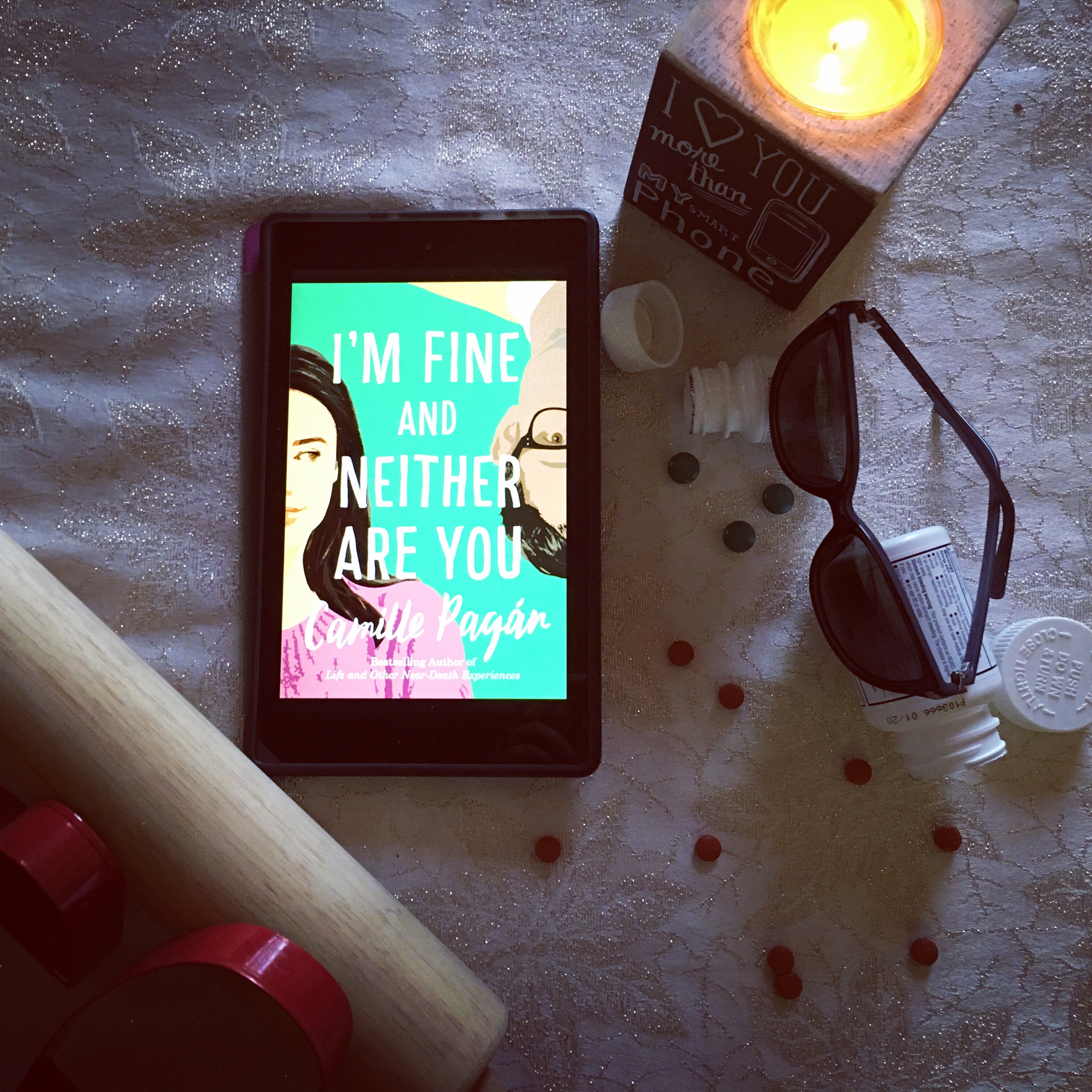
I’m Fine and Neither Are You.  This one was another freebie from Amazon Prime.  To be honest, I didn’t read the description when I chose it.  I liked the title.  To me, it captured the theme of depression.  I feel like a lot of the time, people who are going through some stuff will say that they are just fine when really, they are so far from it.  A+ on that title game.

I only had one issue with the book, and it’s a little complicated.  I didn’t like the way it was written.

Let me back that up.

I think it was written the best way it could be POV-wise.  Third person wouldn’t do well to show the raw emotion the main character, Penny, goes through at the loss of her best friend.  It just wouldn’t be the same story.  I don’t think there was too much dialogue, and I think the pacing was good.  It was fine for what it had to offer.  My main problem lies in the fact that I did not like Penny very much as a character, and a big part of that is unfair to say on my part, because my reasoning isn’t a solid problem with the author’s (Camille Pagán, btw) writing style or voice or some editing issues or anything like that.

I didn’t like Penny because I saw a lot of myself in her.  And as everyone who knows me would tell you, no one hates me more than me (sometimes I’m joking sometimes I’m not but it is what it is).  So to see my own thoughts and worries and keeping to ridiculous expectations and losing battles just trying to keep the peace was, to me, disgusting.  Vulgar, even.  Problems I’m having in my own life are just laying there in print (or pixels if you wanna get technical on me) (pretty sure you can buy a physical copy of it, though) for the world to see.  Make sense?

Like looking in a mirror and I don’t like it – Photo by Lisa Fotios on Pexels.com

That being said, while I hated the main character, I think she was well written.  I think the pacing of her mind in any given situation is right on par for what a real person (ahem, me) would be thinking.  Her insecurities and pushing boundaries and inherent need to get out of her current life are believable, and let’s be honest here, believability of a character is one of, if not the most, important element of a story.  I think it’s important to keep in mind that you don’t have to like the protagonist.  In fact, I think a semi-unlikeable protagonist is better than one everyone loves, if only because their character is usually more complex, and as a result, more interesting.  While I did not like Penny, she definitely piqued my interest.

Okay case closed we get it we get it.

There’s one more point I wanted to touch on briefly before closing this one out (minor spoiler alert):

Suicide.  Suicide and how it effects the ones around us.  Suicide and how hard it is to be upfront with what happened and how hard it is to cover it up.  While there is no real way of knowing whether or not Penny’s friend’s death was premeditated or just a bad mistake, it doesn’t change the outcome.  It leaves so many questions unanswered for the ones left behind, and it’s not fair for them.

I read this book when I was at a bit of a low point.  I was dealing with issues at work and at home and myself.  I was overwhelmed with the need to run away from everyone by any means necessary.  I don’t know if I meant to go down the road of considering self-harm yet, but left unchecked, I would have.  Life can get overwhelming when you set such a high standard for yourself, and if you’re left in your head for too long, things get messy.  It’s hard to explain what you need or the logic of your thoughts to anyone else, because that’s a mystery even to you.

I’m not going to say that this book saved me.  That would be a blatant lie.  But it did get my mind turning in a different direction.  Seeing my thoughts coming from a book from a stranger was a weird, tough love sort of eye opener.

Confused?  It’s okay.  Me too.

Overall, this book hit home in a lot of different ways.  It’s one that I’ll likely read again when I’m in a better place emotionally, namely to see if my opinion of Penny has changed at all.  I give the book a 7/10.  I give Penny a -5/10.  Just don’t like her, yo.

Have you ever read a book that you liked, even though you didn’t care for the protagonist?

Uncategorized

Just A Little Bit Hard To Swallow

Two words: Murder.  Mystery. 

Unf!

Okay, so I’ll be the first to admit, murder mysteries aren’t normally the first thing I go for when I go to a bookstore.  It’s not that I have anything against them.  It’s moreso that I prefer my murder mysteries in a different medium altogether.  Murder whodunits go wonderfully on my television screen.  Printed on page, however, it tends to go on just a little too long for my liking.  I have a tendency to get bored halfway through and be tempted to just skip to the end to see if my prediction for who killed who is correct or not.  It’s like…get it done and over with already!

The Throat was so wonderfully different from what I thought it would be.  I had hopes it would be decent—the man wrote a couple books with Stephen King, so it almost had to be—but decent doesn’t quite cover what this experience was.  Peter Straub packed a punch with his characters, and managed to keep me guessing for 689 glorious pages. 

https://www.instagram.com/p/ByONw3AAUGe/

Any faults in this novel I am willing to assume is from my own misunderstanding.  By that, I mean that the book is actually part of a series, and I was unaware of such when I picked it up.  I mean, it said so right on the dust jacket, but I kind of just glanced over it before I said “Oh, yeah, this is the next one on the list for sure.”  A lot of my books are hand-me-downs.  Work with me here.

So, the faults.

  • Characters:  There was many.  Many cops, many witnesses, many fillers.  So many characters, in fact, that I had problems keeping them apart from each other.  Now, I’m not marking that as a hardcore problem.  Like I said, this isn’t his first book following the main character.  I could be missing something/confusing some people for others because the reader had a chance to get fully acquainted with them in the first novel.  Or there could just be that many people in the novel that I just can’t keep them straight.  It’s anyone’s guess at this point, really.  But, I’m going to give it the benefit of a doubt.
  • Timeline:  This is another thing I can’t bring myself to be too harsh about, not because of the benefit of a doubt but because my feelings as I read The Throat changed.  It starts with the main character, Tim Underhill, and his childhood, then moves on to him in Vietnam, where it focuses a good chunk of the story.  Then it jumps to several years later, when he is a successful writer and gets called back to his hometown.  Looking back, I can understand why it was all formatted that way.  It becomes clearer as you go, because certain pieces you can only understand if you’ve gone through his past, but for that first portion of the book, I was lost.  I didn’t know why any of it mattered or what any of it had to do with the serial killer I was promised an encounter with.  When so many people who write stories say that you should start as close to the end as possible, why were we starting from his early childhood?  The answer is obvious by now, but it wasn’t then, ya feel me?  The short of it: I drug my feet in the beginning waiting to get to a point where it wasn’t a dizzying chore to do so.
  • Walter Dragonette:  No spoilers.  I’ll just say he is super interesting when we first meet him then later on he completely drops off the radar and I’m still confused as to the real part he played in the story.  I liked him a lot, and while he was probably meant to be just a minor character, I would have liked to see more of him.  Plus, again, the situation with him is iffy as to what happens, and I don’t know if it’s ever fully explained in the book and I missed it, or if, like I said, he wasn’t meant to be anything but filler.  I don’t know how to elaborate without spoiling, so I’ll just leave that there.

Okay, enough with the bitching.  Mostly because I don’t have much to bitch about.  Here’s some of the strongest things I found in The Throat.

  • Tim Underhill:  Oh, Tim Underhill.  How I love thee so.  He wasn’t perfect, and that’s my favorite type of main character.  His loyalty lies with himself, which is refreshing in its own right.  He’s skeptical even of those he considers, or considered at one time, friends.  He’s not extraordinary in any way shape or form.  He relies on other characters throughout the novel to bring him closer to his end goal: find out who the Blue Rose killer is.  And the best part?  It’s not even his job to do so.  So many stories like this rely on telling it through the eyes of the detective in charge of the case, but Underhill is just a writer.  A writer who’s childhood friend’s wife was murdered.  A writer, who in all honesty, is there to gather new material for a book.  He’s not a bad guy, but he has his own priorities that others would find selfish or even shameful.  Which leads me to my next point…
  • False leads:  More reason to love him is that he doesn’t have the whole thing figured out chapters before the reader does.  He’s along for the ride just as much as we are.  Just like any other good murder mystery, there are plenty of false leads that Underhill follows whole-heartedly.  He believes each false trail, and because he believes it, the reader believes it as well.  He gets himself into trouble because he believes he’s doing the right thing, then he learns from his mistakes, and sometimes is at a loss of what to do next.  He’ll counsel with colleagues and friends and witnesses until he figures out the next step.  There aren’t just a couple of red herrings, either.  Peter Straub keeps them coming all the way to the end.  It’s a pointing fingers bonanza up in this shiz, and it’s wonderful.
  • No such thing as a happy ending:  I will not spoil.  I will not spoil.  I will not spoil.  But, what I can say, just as a blanket statement, is that my favorite type of ending in any story is when it’s not all wrapped up in a neat package.  I don’t mean ending on a cliffhanger or anything like that.  The pieces are all there and loose ends tied up, but the string is frayed and split and burned and the package has been tossed around by FedEx one too many times.  The insides are still there, mostly unharmed, but no longer pristine.  I’m a firm believer that in real life, there are no happy endings, and this book emulates that.  It’s an ending, and it’s a good ending, but it’s not the ending the reader might have wanted.  It’s like if you go up to someone who’s really made you mad, who totally has it coming, and you confront them about everything.  You think that once it’s out in the open, you’ll feel better, and maybe you do for a minute or two, but once it sinks in, you realize you don’t really feel better at all.  They are going to stop doing whatever it was they were doing to make you upset, and that’s good, but you might have said some things you didn’t mean to say, and you can’t take that back.  You don’t feel better, and maybe you even feel a little worse than before.  Is this the best analogy?  Nope, but we’ll roll with it.
Who is the Blue Rose Killer???? Photo by Pixabay on Pexels.com

TL;DR:  The Throat by Peter Straub.  10/10 would recommend.  10/10 would find the rest of the series.  10/10 changed my mind about how I feel about murder mysteries.  For real, though.  It’s an enjoyable read, and even if these types of books aren’t your forte, I recommend you give it a try.  Maayyybe try to find the first book, though.  I won’t guarantee it’ll make more sense, but eh, it’d make sense for it to make more sense.

Do you like books about serial killers?  What one would you recommend? 

Uncategorized

Harry Potter and the Time Everyone Died

Game of Thrones ain’t got nothin’ on the last of the Harry Potter series.

Let me backtrack.  I’ve never read Game of Thrones.  I’ve never watched the series.  But I imagine that nothing in its pages will stab as deep as some of my favorite characters being slashed, zapped, and otherwise magicked out of existence.  And I totally, most definitely, reserve the right to contradict myself should I ever delve into kings and dragons and drunk dwarves.  And I totally, most definitely, sincerely, reserve the right to retract that statement should it be false and otherwise insensitive.  I don’t know.  I don’t know what it’s about.

But that’s not why we are here.


https://www.instagram.com/p/BvrmfpygKnz/

Harry Potter was a huge deal when I was in grade school.  Everyone who was anyone read the books and watched the movies and bought the merch and wrote the fanfiction and wrote the slashfiction…eh, you get it.

I was late getting on the train.

So, back up a bit more, I adored the movies, and my friends were all reading the books, so I tried to read them, too.  Key note: tried.  I read the first book by myself, but the second and part of the third, I had to use my own personal audio book: my mother.  She would sit in the red, worn chair in the living room, and I would sit on the floor in front of her, and listen to her read to me aloud.  This was during a time that I was “too old” to have my mommy read to me (shame on me for ever thinking that), but I had some problems comprehending what I read to myself.  The words wouldn’t click well, and with the make-believe creatures and spells and odd names JK Rowling added into the mix, my head was spinning.  Listening to it slowed me down enough to understand what was going on.  It was nice.  My mom is a pretty swell gal. 

Fast forward a bit, I picked up the first Harry Potter again a couple years back for old time’s sake.  And then the second.  And the third.  And I fell in love with the series for what seemed like the first time.  Reading it as an adult is a completely different experience than reading/listening as a child.  Ten-year-old me was enthralled by the magic in each installment.  Twenty-nine-year-old me was floored by the way every book got a little darker, a little more serious.  There was so much I didn’t pick up on the first go around.

Let me geek out for just a second.

Yule Ball. 2018.
Hi, my name’s Manda and I’m a Hufflepuff.  Sorting hat said twice I belonged in Gryffindor, but if Harry can choose his house than so can I.  I’m dating a Slytherin.  My best friend is a Ravenclaw.  I have a house elf that is well loved and treated better than anyone else in our home.  His name is Dobby (no relation).

I could keep going, but I’ll try to keep this one short.  So many people have read this book already, so if you haven’t by now, this review probably won’t sway you either way.  I’ll just go over a few points where I had to put the book down and think a while. 

  1. The Dumbledore Reveal
    If the reader is anything like me, they had to take long breaks in book six during the emotional time that was Dumbledore’s final moments.  I loved him.  I thought nothing but good about him.  He seemed so wise, so caring, so interested in helping Harry be the best he could be and mentoring him when needed.
    And then book seven happened.
    The Deathly Hallows took Dumbledore, wadded him up in a little ball, and shoved him in a toilet.  Then, it took a gigantic shit all over the top of him.
    And it did it all in the name of the greater good.
    I had lots of strong feelings on this, as you can probably tell.  But, despite that, I don’t disagree or hate on Rowling for doing it.  I think it runs along the same lines as you should never meet your heroes.  From a distance, Dumbledore seemed almost godlike in his wisdom and strength and love.  But after he dies and the truth comes out, he’s not so godlike after all.  Like any human, he has flaws, and his were pretty major in my ever so humble (and shitty) opinion.  BUT!  I don’t think he ever did anything with ill intent.  I truly believe that he believed the way he handled everything was the best way to do it.  He sort of runs along the lines of chaotic good.  He doesn’t care who he hurts along the way, so long as that in the long run, it was for the best.  He doesn’t hate Harry.  He’s not priming him for war and death and nothing beyond that.  I think he really did care about him and his well-being, but his shady way of keeping secrets and never being straightforward with Harry or anyone else didn’t help his cause.  He was a bottom line man, and the bottom line was that for everyone else to live in harmony, Harry would have to die.  Not a bad man, not a good man, but a man.
  2. This Passage
    “Tell me one last thing,” said Harry.  “Is this real?  Or has it been happening inside my head?”
    Dumbledore beamed at him, and his voice sounded loud and strong in Harry’s ears even though the bright mist was descending again, obscuring his figure.
    “Of course it is happening inside your head, Harry, but why on earth should that mean that it is not real?”
    Oh.  My god.
    So, of course, we can take this in the literal sense; that Harry is talking to Dumbledore in his head yadda yadda.  But this line means so much more to me than that. 
    On one end of the spectrum, the same can be said of mental illness.  It’s in your head, of course, yes, great, grand, wonderful, but that doesn’t mean that it’s not REAL.  Depression is a thing I deal with on my day-to-day, and even though it is in my head, it is real to me.  Anxiety is in your head, but it still affects you.  It’s invisible, you cannot see it, you cannot touch it, but it’s in your head, so it’s real. 
    On the other end, it can be said of fiction in general.  When Dumbledore died at the end of the sixth book and made me bawl for fifty plus pages, it was not real.  He is not real.  But, in the pages, he is.  He felt like a living, breathing person, and I felt his death the same as I would a person I knew.  When Harry found out all the bad after his death, about his family and secret sister, about his plan for Harry, I felt betrayed, angry, hurt, that this person, this make-believe person, would lie to me like this.  Good books make you feel, and the worlds inside the pages feel real to you, even if the rest of the world can’t see it. 
    I dunno, dude.  I just loved this line.  I had to flip the pages and breathe a little bit before I could go to the final battle.  Dumbledore, man.  I loved him.  Then hated him.  Then simply accepted him.
  3. Snape, Snape, Severus Snape
    God.  Damn.  It. 
    Reading this entire series knowing the crucial role Snape played, I picked up on a lot that I don’t think I would have if I experienced it firsthand this read through.  One point that really sticks out for me was from I believe book six?  Maybe the end of five?  Voldemort is back, and Snape runs off with the rest of the Death Eaters, and he won’t let Harry cast an unforgivable curse.  He stops him every time, telling him to stay down.  First go through, this could definitely be seen as a thing where he just wants to get away and stopping Harry is the most logical thing to do.  But, and this is just my take (and it could totally be wrong or right because it’s been a while since I’ve read that part so bear with me here), I think Snape was trying to save Harry.  He didn’t want him to cast the curse, and it wasn’t for Snape’s own good.  He knew Harry had never done anything like that before, and he didn’t want him to carry the guilt on his shoulders.  He was trying to spare him.
    I feel for Snape, I really do.  He was forced into a bad situation, playing sides and keeping secrets, all in the name of the greater good (side eyeing you HARD Dumbledore).  He doesn’t really want to be with the Death Eaters, but he has no choice.  He has to keep up appearances, get on the Dark Lord’s good side.  At the same time, he doesn’t really want to be responsible for keeping Harry safe.  The boy just serves as a painful reminder of what could have been but what never would be.  It doesn’t help that he looks and acts like his father, but with the added pain of having his mother’s eyes.  He doesn’t like Harry, but in his own way, he loves him.
    That being said, I can’t pretend he doesn’t have his own flaws on this one.  He doesn’t love Harry for Harry’s sake, but for his own.  It’s the last piece of Lily that he’ll ever have.  When she died, he didn’t care about James or Harry, only her, only that she was dead.  Which I get it, I understand, he hated James and he hated that James won her and he didn’t, but like…come on, dude.  There’s a time and place, and when they’re both dead on the floor, maybe put aside your differences for a hot minute?  Maybe care about the little baby who lost their family and is forced to live in a freaking closet for half his life?  Maybe show a little bit of humanity?
    That also being said, I cared more for him by the end than for Dumbledore.  I dunno, I guess because Snape was straight up about how he hated James and didn’t care much for a lot about Harry, but he loved and wanted Lily.  Dumbledore played everyone along even when he didn’t have to.

So, how about that ending?  Who was your favorite character?  What house do you belong to??  Geek out with me.  My inbox is always open.

Uncategorized

Gone, but Never Forgotten

This.  Fucking.  Book.

https://www.instagram.com/p/BuRyzz9AQlX/

Where do I even start?  The believable, relatable characters?  The phenomenal descriptions from beginning to end?  The total twist at the end that I did not see coming?

Nah… Let’s start instead with the subject matter of the book.

I feel like rape stories are done time and time again, but I haven’t even seen one from the point of view of someone not directly involved in the act.  This story is told through the daughter of the accused, who allegedly raped her best friend.  WAIT it gets worse.  The dad allegedly raped his daughter’s best friend, who happens to be underage.  WAIT WAIT!  The act allegedly happened while the daughter was in the same room, sleeping.

What.  The.  Fuck.

The daughter, Katie, has to go through the next six years of her life without her father.  She is fiercely loyal to him, and grows up hating her best friend, Lulu, for ruining her family’s life.  She cuts contact completely, not only because the lawyers tell her to do so, but also because she wants nothing to do with her anymore.  Katie was in the same room, for godsake.  She would have known if something was going down that shouldn’t have been.  Besides, her father loved those girls.  He accepted Lulu as one of his own.  He was a well-respected man of the community.  There’s no way in hell that Lulu’s allegations could be true.

Right?

The closer it comes to her father’s release date, the more unsure she becomes of what exactly happened that night.  Had there been a fight between herself and Lulu?  Did Lulu have motivation to get Katie’s father a one way ticket to the jailhouse?

There’s a blank spot in her memory (some forgotten hours, ROLL CREDITS) but when she goes back to the cabin they spent those summers at to get it ready for her father’s return, she finds a box of letters and receipts that offers answers if only she is brave enough to follow the trail.

Did her dad do it?

Did Lulu lie?

I’m not here to spoil that for you.  Read this book.  It’s not one I would normally pick up, but it was a freebie on Amazon one month (yey prime!) and I’m glad I chose it. 

The Forgotten Hours delves into a subject matter that is uncomfortable but necessary.  There’s the #MeToo movement happening (wow girl welcome to the party like fifty years later seriously), and I first want to say that I stand behind it completely.  Consent is an important thing to give and receive before any sort of bumping of the uglies commences.  With more and more people coming out and saying that they’ve been harmed in one way or another by another person, it can be hard to trust in someone.  And I’m not saying that it’s just for women, either.  For men, too, it can be hard to trust.  And I feel like this is because the whole concept of “consent” is a tricky subject.

Now, backtrack a little bit.  When I say that, I don’t mean blatant rape.  Like, violence against a person is bad.  Date raping a person is bad.  If someone says “No, don’t touch me,” that is obviously rape.  If someone is passed out and you choose to feel them up, that is bad.  There’s things that are obvious.

You still with me here?

So, consent.  It’s tricky.  It’s tricky because both people are supposed to be mind readers.  In the case of Lulu and Katie’s father (NO SPOILERS okay some spoilers), there is no violence.  There is no “No, don’t touch me.”  There is the thing of being underage and statutory and all that shiz, but that’s a different subject.  Let’s take that out of the picture entirely.  Let’s pretend she’s eighteen for the sake of my point. 

Okay, we pretending?  Sweet.

If Katie’s father and Lulu sleep together, and Lulu didn’t really want to, but she didn’t say anything otherwise, is it rape?  Or did they consent?  I don’t know, because what is considered consent varies from person to person.

Which is why it’s important that people talk about it.

Where do we draw the line?  Katie wasn’t completely sure.  Lulu wasn’t entirely certain.  Katie’s father, well, he goes to jail over it, so you can draw your own conclusions on what he thinks.

One final point I want to make is about character.  As I said before, Katie’s father is a well-respected member of the community.  He’s involved in his family.  He is a friendly, outgoing man.  He’s always ready to welcome people with open arms.  He likes people and people like him.  He’s always ready to turn any bad situation into a new opportunity.  He has all these good qualities, and so his friends and neighbors can’t believe that he is capable of doing something as terrible as what he’s accused of.

What people forget is that every person (both in real life and in good fiction) has multiple qualities that make them who they are.  Very rarely is there a human being who is all good or all bad.  Katrin Schumann, the author of the book, made it a point to tell all the good about Katie’s father all the way through, and that’s important.  People who are considered saints by all that know them are still capable of doing horrible things.  People who are labeled as criminals can still help those in need.  There are no monsters in this world. 

I’ll say it again:

People are not monsters.

Big Foot might be where I draw the line Photo by Gratisography on Pexels.com

People you don’t like are not just like Hitler, and Hitler was not a monster.  He was a man.  A man who committed atrocious acts and convinced a country to dispose of an entire group of people for reasons I cannot pretend to understand, but he also did a handful of good, too.  In no way does that excuse what he did.  But at the end of the day, he was a man.  Not a monster.  I feel like society is quick to label people monsters because they don’t want to accept that anyone is capable of doing bad things, but at the end of the day, at the end of right and wrong, we are all capable of anything.  And that’s scary.

Annddd somehow I went from a book review to the fundamentals of labeling.  I think that’s a good place to stop.

Tl;dr Read The Forgotten Hours.